George Rodrigue (1944-2013), born in New Iberia, Louisiana, grew up immersed in the vibrant traditions of Carnival, or Mardi Gras, a festival rich in history and symbolism, with its iconic colors of purple, green and gold, representing justice, faith, and power, respectively. While these colors are deeply associated with the celebration, Mardi Gras encompasses a broader spectrum of hues, reflecting the festival’s diversity and exuberance. The Carnival Season spans approximately six weeks, from Twelfth Night to Ash Wednesday, and features parades, elaborate floats, costumes and music, culminating in the lively Fat Tuesday festivities.

George Rodrigue
Carnival in America has a rich history spanning hundreds of years, celebrated first in Mobile, Alabama in 1703, soon followed by Biloxi, Mississippi in 1720 and eventually New Orleans in 1827. Today, multiple states have significant Mardi Gras traditions. In Louisiana, the festival’s vibrant spirit was part of Rodrigue’s childhood during the ‘Carnival Balls’ of the 1940s and 50s in New Iberia. He often laughed as he recalled his mother and aunts forcing him into costume contests with his cousin Arlene. According to Rodrigue, the pair wore elaborate homemade costumes and won the contest so many consecutive years that they were eventually disqualified!
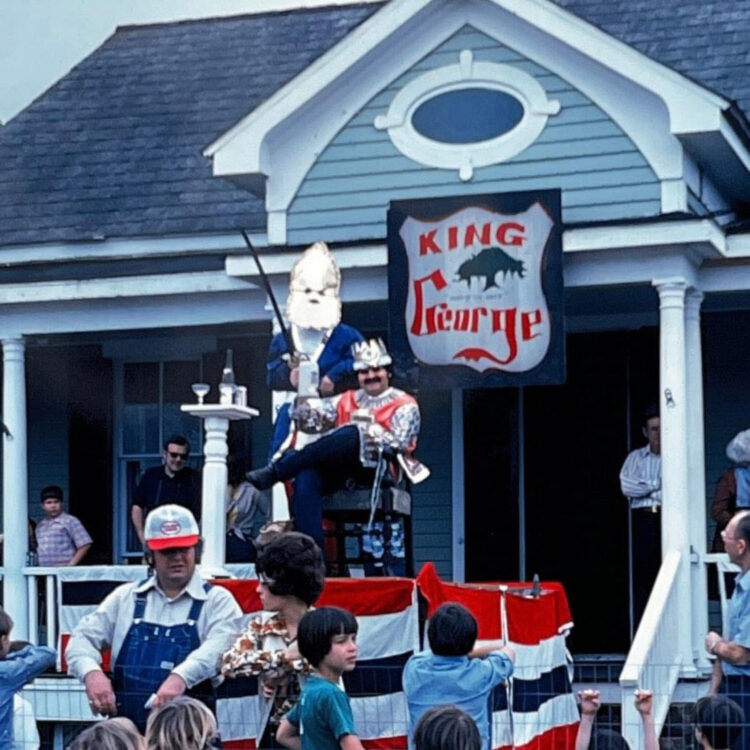
In the mid-1970s, Rodrigue proclaimed himself King of Mardi Gras at his Jefferson Street home and gallery in Lafayette, Louisiana.
“I displayed a huge banner that said ‘The Real King.’ Two parades passed my house on Mardi Gras Day. The party started small, just me and my dog Tiffany on the platform. Within three years we had 500 people, all throwing custom-designed Rodrigue doubloons.” -G.R.
Rodrigue’s Mardi Gras tradition continued for more than a decade until it became so popular that the city moved the parade route, lest the artist upstage that year’s appointed King.
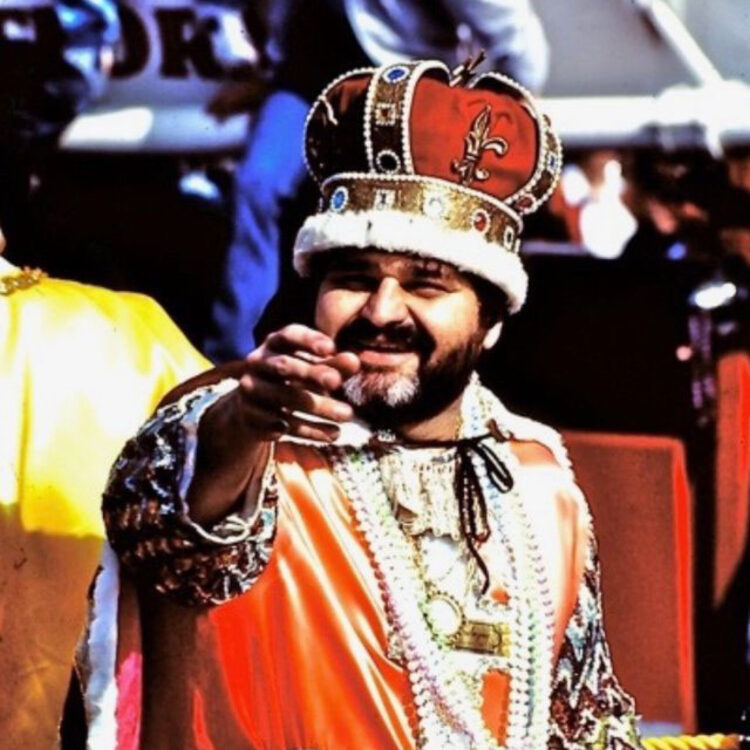
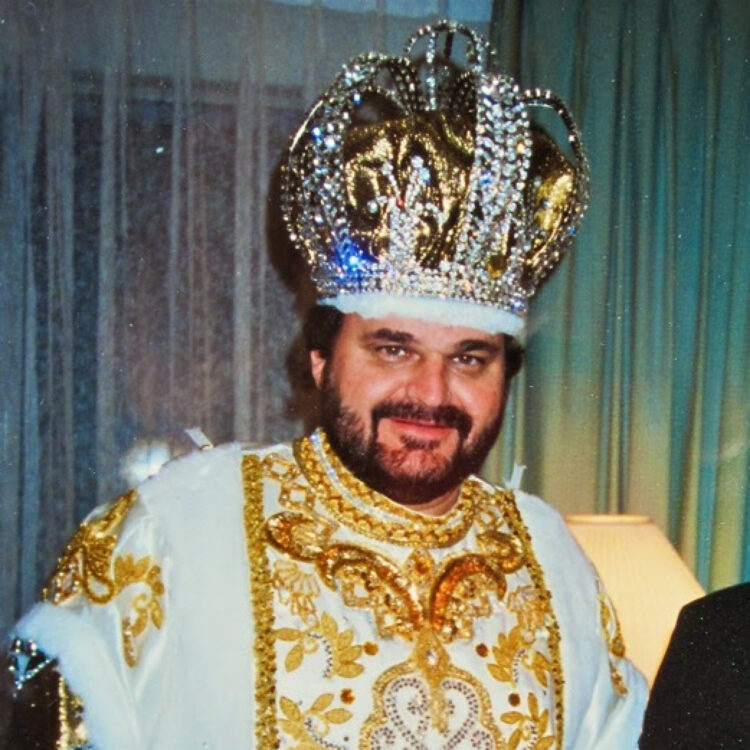
Rodrigue reigned in 1992 for the first time as an official Mardi Gras King, for the all-female Lafayette Krewe of Xanadu. In 1994 he was crowned King of the Mystick Krewe of Louisianian’s 50th anniversary of the Washington Mardi Gras Ball, a three-day private celebration for 5,000 guests, hosted annually in Washington, D.C. by the Louisiana Legislature. It was the honor and excitement of this opportunity that led to his self-portrait, It’s Good to Be King. The painting reunites the artist at Mardi Gras with his longtime parade companion and dog-muse, Tiffany. For thirty years, It’s Good to be King remained in a private collection in Japan until Rodrigue’s widow, Wendy, arranged to acquire it for her collection, as well as exhibition within museums.
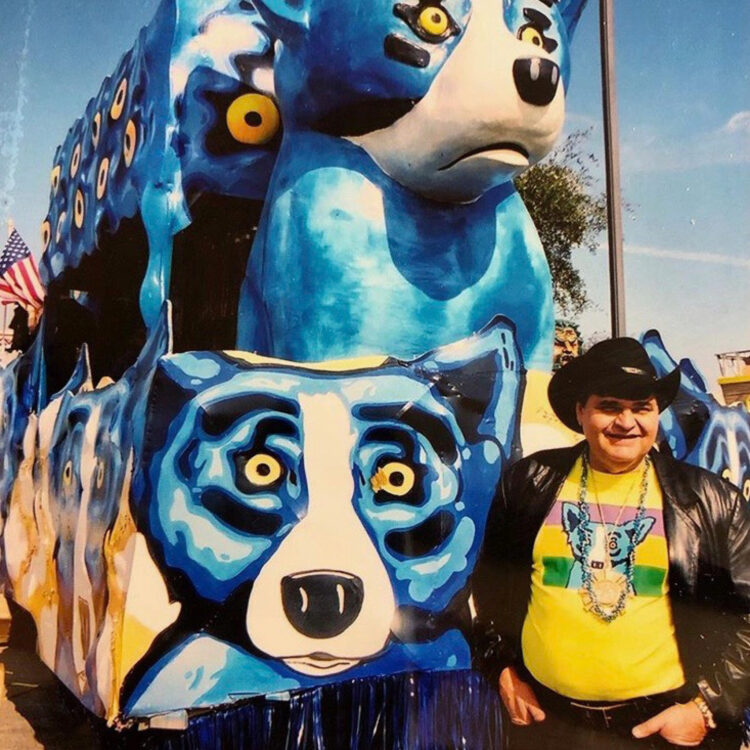
Over the years Rodrigue served as Grand Marshall or King of Louisiana parades in New Iberia, Lafayette, Butte La Rose, Pierre Part and New Orleans. The highlight was the Argus parade in Metairie, a suburb of New Orleans, where his iconic Blue Dog float ran annually throughout the 2000s on Mardi Gras Day. Mardi Gras, complete with the colors, the cultural tradition, pageantry and joie de vivre continued as a recurring theme in Rodrigue’s work, not just during Carnival, but all through the year. This kaleidoscopic vibrancy favors heavily in his Blue Dog Series, yet even his Oak Trees, as sprinkled throughout this exhibition, eventually take on the surreal and colorful feeling of the season.